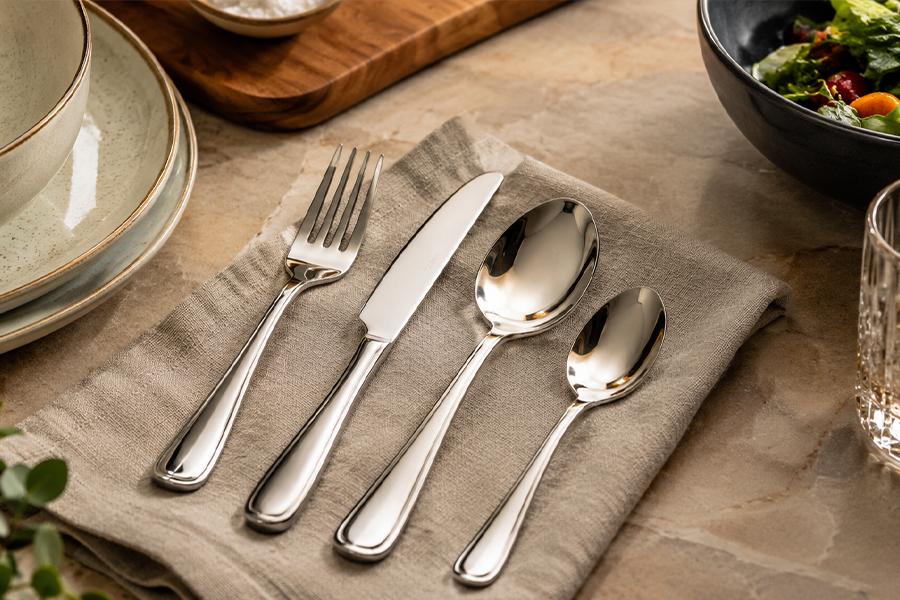
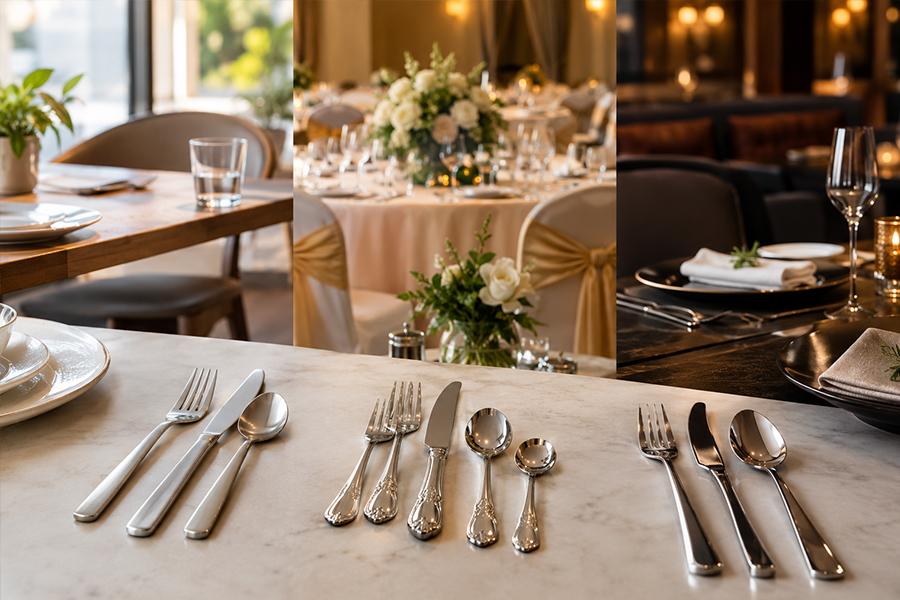
Cutlery is one of the few elements in a hotel that guests physically interact with throughout a meal.
It may look like a small procurement category compared with furniture, kitchen equipment or tableware, but its impact is constant. Every breakfast service, banquet dinner, room-service tray and fine-dining experience depends on cutlery that feels right, looks appropriate and performs reliably.
For hotels evaluating hotel cutlery set wholesale suppliers in India, the challenge is not simply finding one attractive collection. The more important question is whether the cutlery works across different service formats without compromising durability, presentation or operational efficiency.
Daily service, banquets and fine dining each place different demands on cutlery. Understanding those differences can help hotels make better purchasing decisions.
Daily Service Needs Reliability Above Everything Else
Breakfast restaurants, all-day dining outlets and coffee shops typically operate at high frequency.
Cutlery moves constantly between tables, clearing stations, dishwashing areas and storage. In these environments, durability matters as much as design.
The right cutlery for everyday service should withstand repeated washing and handling without bending easily, losing its finish or becoming uncomfortable to use.
Weight is important too.
Very lightweight cutlery may feel economical, but it can also create a less premium impression. Excessively heavy pieces, on the other hand, may be unnecessary for high-volume service.
Hotels should look for a balanced middle ground. The pieces should feel substantial enough to communicate quality while remaining practical for constant use.
For daily service, simplicity is often an advantage. Clean designs are easier to match with different crockery styles and can continue to look relevant even when the restaurant interiors or table settings evolve.
Banquet Cutlery Has Different Priorities
Banquet operations work at a very different scale.
Hundreds of guests may be served at the same time, sometimes across multiple events within the same property.
This means banquet cutlery needs to be durable, easy to handle in volume and practical to replace.
Consistency is particularly important.
When hundreds of forks and spoons appear together across a large event setup, even small differences in finish or size can become noticeable.
For this reason, hotels should work with suppliers that can provide large quantities from consistent production batches.
Storage and stacking should also be considered.
Banquet teams move cutlery constantly between stores, service areas and event spaces. Designs that are overly delicate or difficult to organise may create unnecessary operational complexity.
For banquets, versatility usually delivers greater value than highly specialised design.
A well-selected collection should work for weddings, conferences, corporate dinners and social events without feeling out of place.
Fine Dining Requires Greater Attention to Detail
Fine-dining cutlery needs to achieve something different.
Here, the tactile experience becomes more important.
Guests notice how the knife feels in the hand, how the fork balances and how the finish interacts with the rest of the table setting.
Weight, proportion and detailing all matter more.
A fine-dining restaurant may choose slightly heavier cutlery because it creates a stronger sense of substance.
The design may also be more distinctive, depending on the restaurant concept.
However, visual complexity should never come at the expense of usability.
The best fine-dining cutlery feels refined rather than decorative.
It should support the food and the overall table experience without drawing unnecessary attention away from them.
One Collection May Not Be Right for Every Outlet
Many hotels operate several dining concepts under one roof.
A breakfast restaurant, poolside café, banquet hall, executive lounge and signature restaurant may all require different table settings.
Trying to use one cutlery collection everywhere may create visual consistency, but it can also make certain outlets feel generic.
The better approach is often to create a controlled hierarchy.
Daily-service areas can use a versatile core collection.
Banquets can use a durable, scalable range.
Fine-dining outlets can use a more premium collection with greater weight or a distinctive finish.
These collections do not need to look identical, but they should still feel compatible with the wider hotel brand.
Stainless Steel Grade Should Be Evaluated Carefully
Material quality is one of the most important factors when purchasing hotel cutlery.
Stainless steel is widely used because it offers durability, corrosion resistance and relatively easy maintenance.
However, different grades can perform differently under commercial use.
Hotels should ask suppliers for clear material specifications and understand what they are buying.
In hospitality, repeated washing places much greater stress on cutlery than normal domestic use.
The quality of the material influences how well the cutlery maintains its finish and structure over time.
This is especially important when purchasing from hotel cutlery set wholesale suppliers in India, where two products with similar designs may have very different material specifications.
Weight and Balance Should Be Tested Physically
Photographs cannot tell you how cutlery feels.
Before placing a large order, hotels should request samples and test them.
Hold the fork.
Use the knife.
See how the spoon sits in the hand.
Check whether the handle feels too thin, too heavy or uncomfortable.
Balance is especially important because guests interact with cutlery repeatedly throughout the meal.
Poorly balanced products may still look attractive on the table, but the difference becomes obvious during use.
Operational teams should also be involved in sample reviews.
Restaurant managers, banquet teams and service staff often notice practical issues that procurement teams may overlook.
Finish Should Match Both Design and Maintenance Needs
Cutlery finish plays a major role in presentation.
Mirror-polished stainless steel remains one of the most versatile choices because it works across classic and contemporary hotel environments.
Satin and brushed finishes feel softer and more modern.
Matte finishes can create a more understated look.
PVD finishes such as gold, black or rose gold may work well in premium restaurants and event environments.
The key is to consider maintenance at the same time.
Some finishes show fingerprints more easily.
Others may require greater care during washing.
Hotels should understand cleaning instructions before finalising the collection.
A finish that looks impressive initially but becomes difficult to maintain may create unnecessary operational problems.
Think About the Full Cutlery Range
Hotels need much more than table forks, knives and spoons.
Depending on the property and service style, the requirement may also include dessert forks, soup spoons, teaspoons, steak knives, cake forks, fish knives, serving spoons and specialised service pieces.
The wider the collection, the easier it becomes to maintain consistency.
This is particularly important for fine dining and banquet service, where several pieces may appear together on the same table.
When comparing hotel cutlery set wholesale suppliers in India, hotels should therefore evaluate the complete range rather than only the basic three-piece setting.
Replacement Availability Is Essential
No hotel keeps every piece of cutlery forever.
Items get lost, damaged or moved between outlets.
Banquet operations are particularly vulnerable to inventory loss because of the scale of service.
Hotels should therefore ask whether the chosen collection will remain available for repeat orders.
If a design becomes unavailable quickly, the property may eventually be forced to mix collections or replace a much larger quantity than necessary.
Long-term availability can significantly reduce procurement headaches.
For multi-property hotel groups, this becomes even more valuable.
Quantities Should Reflect Real Operations
Ordering cutlery based only on seating capacity is rarely enough.
If a restaurant has 100 seats, it does not simply need 100 forks.
At any moment, some pieces may be on tables, some in the wash, some being polished and some waiting for the next service cycle.
Banquets require even larger buffers because multiple functions may take place simultaneously.
Hotels should calculate quantities based on peak service requirements, turnover, cleaning cycles and backup stock.
An experienced hospitality supplier can help with these calculations.
Over-ordering ties up budget unnecessarily.
Under-ordering creates operational pressure during busy periods.
Customisation Can Work for Signature Experiences
Some hotels may want custom cutlery for flagship restaurants or premium event spaces.
This could include logo engraving, special finishes or bespoke handle details.
Customisation can create a strong sense of identity, but it should remain subtle.
The product still needs to feel functional and comfortable.
It should also be easy to replace.
Before approving a customised range, hotels should understand minimum order quantities, development timelines and repeat-production capability.
A custom design only adds value if it can be maintained operationally over time.
Price Should Be Evaluated Across the Product Life
Wholesale pricing matters, especially when ordering thousands of pieces.
However, the lowest unit price is not always the most economical choice.
If cheaper cutlery needs frequent replacement or loses its finish quickly, the long-term cost may be much higher.
Hotels should therefore consider total value.
That includes purchase price, durability, maintenance, replacement availability and usable life.
A product that performs reliably for several years may offer better economics even if the initial cost is slightly higher.
Final Thoughts
Hotels should not approach cutlery procurement as a single decision for the entire property.
Daily service, banquets and fine dining each have different operational and design requirements.
Daily-service cutlery should prioritise durability and versatility.
Banquet cutlery should be scalable, consistent and easy to manage in volume.
Fine-dining cutlery should pay greater attention to weight, balance, finish and tactile experience.
The best purchasing strategy is one that considers both the guest experience and the realities of daily hotel operations.
When comparing hotel cutlery set wholesale suppliers in India, hotels should look beyond appearance and price. Material quality, range, production consistency, replacement support and hospitality experience all matter.
Venus Industries manufactures and supplies cutlery and hotelware for hotels, restaurants, banquets and professional hospitality businesses, with options suited to both high-volume service and premium dining environments.