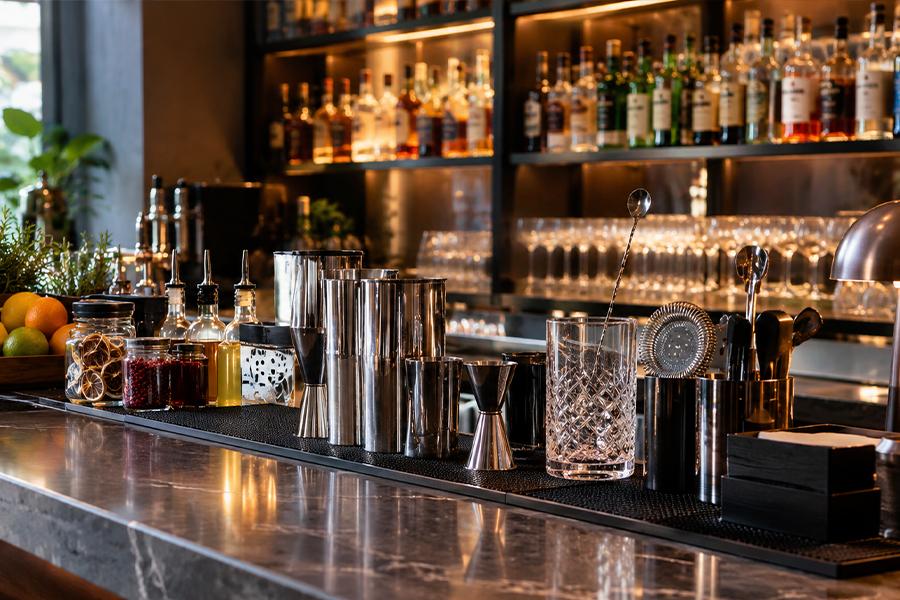
A good bar does not run well because it has more equipment.
It runs well because the right tools are placed in the right environment and support the way bartenders actually work.
For hotels, restaurants, lounges and cocktail bars, the bar setup influences speed, consistency, presentation and even how smoothly service feels during peak hours.
This is why hospitality businesses evaluating bar accessories suppliers in India should think beyond individual products.
A shaker, jigger or ice bucket may look like a small purchase on its own. Together, however, these pieces form the working system behind the entire beverage experience.
The Best Bar Setups Begin With Workflow
Before deciding which accessories to buy, it helps to understand how the bar actually operates.
Where does the bartender reach for ice?
Where are garnishes stored?
Where are drinks shaken or stirred?
How quickly can bottles, tools and glassware be accessed during a busy service?
A well-designed bar reduces unnecessary movement.
The bartender should not need to repeatedly walk across the counter for basic tools.
Frequently used items should remain within easy reach, while less frequently used accessories can be positioned further away.
This sounds simple, but it can have a significant effect on service speed.
For high-volume restaurants and hotel bars, saving a few seconds on every drink adds up quickly over the course of an evening.
Core Tools Should Be Chosen for Use, Not Display
Cocktail shakers, jiggers, strainers, bar spoons and muddlers are among the most frequently used tools in a professional bar.
Because they are handled constantly, ergonomics matter.
A shaker should feel secure when closed and open without unnecessary effort.
A jigger should make accurate measuring quick.
A strainer should fit comfortably across the mixing vessel.
A bar spoon should feel balanced enough for controlled stirring.
When evaluating bar accessories suppliers in India, hospitality buyers should therefore look beyond product photography.
A tool can look impressive and still be frustrating to work with.
Physical handling matters.
Material Quality Has a Direct Impact on Performance
Bar tools work in a demanding environment.
They are constantly exposed to moisture, citrus, spirits, syrups, ice and cleaning agents.
This is one reason stainless steel is so widely used in professional barware.
It is durable, relatively easy to clean and resistant to corrosion when properly manufactured and maintained.
But material thickness and construction quality matter too.
Thin metal can dent or warp.
Poorly finished edges can make tools uncomfortable to use.
Weak joints can reduce service life.
A bar accessory should be able to withstand repeated use without becoming difficult to handle or visibly worn too quickly.
For hotels and restaurants, durability is not only a quality issue. It is also a cost issue.
Products that need frequent replacement increase long-term operating expense.
Measurement Tools Support Consistency
A professional beverage programme depends on consistency.
Guests expect the same cocktail to taste the same each time they order it.
Jiggers play an important role in achieving that consistency.
They help bartenders measure spirits, syrups and mixers accurately.
This affects both flavour and cost control.
Even small amounts of over-pouring can become significant when multiplied across hundreds of drinks.
That is why jiggers should be selected carefully.
The markings or capacities should be clear, and the shape should allow quick handling.
For restaurant groups and hotel chains, standardising measurement tools across locations can also make training and recipe execution more consistent.
Ice Accessories Deserve More Attention
Ice is one of the most important ingredients in a bar.
It changes temperature, dilution and presentation.
Yet the tools used to handle it are often treated as an afterthought.
Ice buckets, scoops and tongs should be easy to clean, resistant to moisture and practical to use during service.
Guest-facing ice buckets also need to look appropriate for the environment.
A premium hotel suite may require something more refined than a high-volume back-bar setup.
The function is similar, but the design requirement is different.
This is why professional bar procurement should consider where each accessory will actually be used.
Barware Should Match the Character of the Venue
The same bar accessories will not suit every hospitality concept.
A luxury hotel bar may favour polished or brushed metallic finishes.
A contemporary cocktail bar may choose matte black or darker tones.
A classic restaurant might prefer traditional stainless steel.
A rooftop lounge may want something more visually distinctive.
The right choice depends on the interiors, glassware and broader service style.
Good barware should reinforce the atmosphere without making the setup feel overly decorated.
Consistency matters more than excess.
A smaller number of coordinated finishes usually creates a stronger result than combining too many styles.
Finish Should Be Considered Alongside Maintenance
Modern bar accessories are available in a wide variety of finishes.
Polished stainless steel remains versatile.
Brushed surfaces feel softer and more contemporary.
Gold, rose gold, black and copper-inspired finishes can make the bar feel more distinctive.
However, every finish comes with maintenance considerations.
Some surfaces show fingerprints more easily.
Some require gentler cleaning.
Others may react poorly to abrasive products.
Hospitality buyers should therefore ask bar accessories suppliers in India about cleaning requirements before approving a range.
The right finish should look good after repeated use, not only when it first arrives.
Garnish Organisation Can Improve Service Speed
Modern cocktail menus often involve multiple garnishes.
Citrus, herbs, spices, olives and other finishing elements all need to remain organised and easily accessible.
Garnish trays and condiment holders can help maintain a cleaner workstation and reduce unnecessary movement.
This becomes particularly important during busy service periods.
A cluttered bar slows down preparation and makes consistency harder to maintain.
Simple organisational accessories can therefore have a surprisingly large operational impact.
They are not decorative extras.
They are part of the service system.
Wine and Bottle Service Need Dedicated Tools
Hotels and restaurants that serve wine need a different group of accessories.
Corkscrews, bottle openers, wine coolers, stoppers and presentation pieces all influence how smoothly service runs.
In many cases, these tools are used directly in front of the guest.
That makes both functionality and presentation important.
A corkscrew that feels awkward can make wine service unnecessarily difficult.
A bottle cooler that does not suit the table setting can feel visually disconnected.
The best choices should work smoothly while remaining aligned with the overall dining environment.
Guest-Facing Accessories Should Feel Intentional
Some bar tools stay behind the counter.
Others become part of the guest experience.
Trays, coasters, ice buckets, bottle coolers and certain service accessories remain highly visible.
These pieces should be selected with the same attention given to glassware and crockery.
A beautifully designed bar can lose some of its impact if the accessories feel generic or mismatched.
The strongest hospitality environments feel consistent down to the smaller details.
That does not mean everything needs to be expensive.
It means everything should feel considered.
Durability Matters More Than Novelty
Barware trends change regularly.
New finishes and unusual shapes can be visually appealing, but hospitality buyers should be careful not to prioritise novelty over function.
A product still needs to survive repeated use.
It should be easy to clean.
It should feel comfortable in the hand.
It should remain available when replacement pieces are required.
A distinctive design may be valuable, but only if it works operationally.
This balance between design and durability is one of the most important things to consider when selecting bar accessories suppliers in India.
Standardisation Can Make Operations Easier
Hotels with multiple bars or restaurant groups operating several locations can benefit from standardising core bar tools.
Using similar jiggers, shakers and preparation accessories makes staff training easier.
It also simplifies inventory and replacement.
Guest-facing accessories can still vary between concepts.
A rooftop bar and a fine-dining restaurant do not need to look identical.
But the operational tools behind the counter can often be standardised without affecting the visual identity of the venue.
This creates greater efficiency while still allowing each outlet to maintain its own character.
Replacement Availability Should Be Planned From the Beginning
Bar tools get lost and damaged.
This is normal in high-volume hospitality environments.
The real problem begins when matching replacements are unavailable.
Hotels should therefore ask whether the selected range can be reordered later.
This is particularly important for specialised finishes.
A replacement shaker or ice bucket that looks noticeably different from the original set can reduce visual consistency.
Long-term supply is often more valuable than a small saving on the initial purchase.
The Supplier Should Understand Hospitality
A supplier that understands professional hospitality will usually approach barware differently from a general homeware seller.
They are more likely to understand volume requirements, commercial cleaning, repeat ordering and the need for consistent finishes.
They may also be better equipped to support customised requirements or larger hotel projects.
When comparing bar accessories suppliers in India, buyers should therefore consider hospitality experience alongside product range.
The supplier should understand not only what the product is, but how it will be used during real service.
Final Thoughts
A professional bar setup works because each tool supports the people using it.
The right accessories improve speed, consistency and presentation without making the process more complicated.
For hotels, restaurants and bars, the best procurement decisions consider workflow, material quality, durability, finish, maintenance and replacement availability together.
Choosing barware purely on appearance often creates problems later.
Choosing it according to how the bar actually operates creates a more efficient and consistent service environment.
When evaluating bar accessories suppliers in India, hospitality businesses should look for suppliers that understand both the visual and operational sides of professional bar service.
Venus Industries manufactures and supplies professional bar accessories and hotelware for hotels, restaurants, lounges, banquets and hospitality businesses, with solutions suited to both high-volume operations and premium service environments.