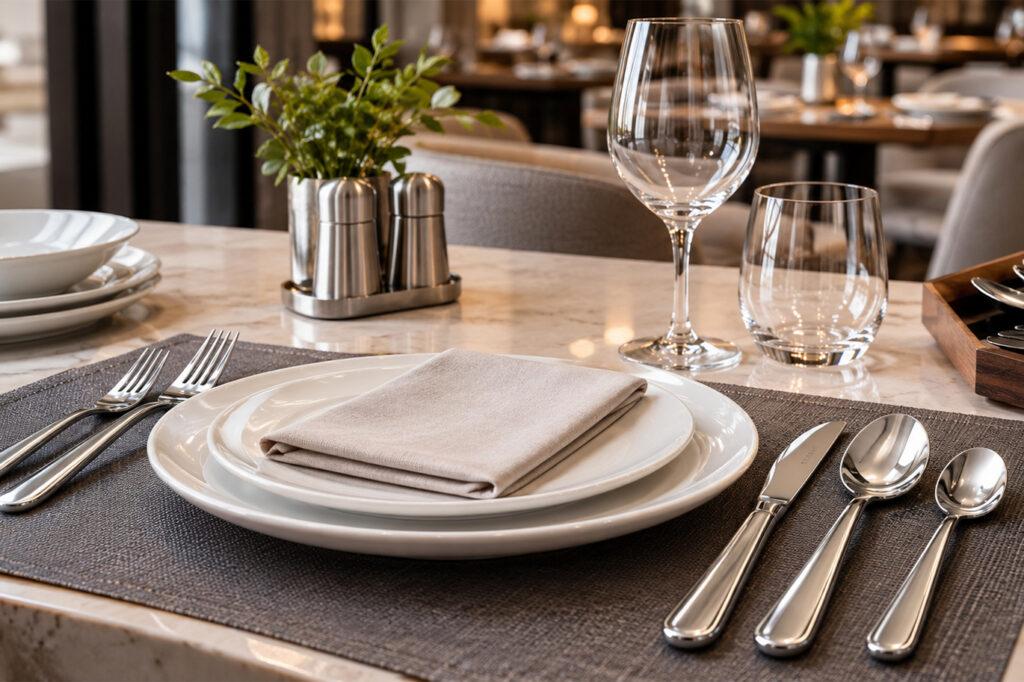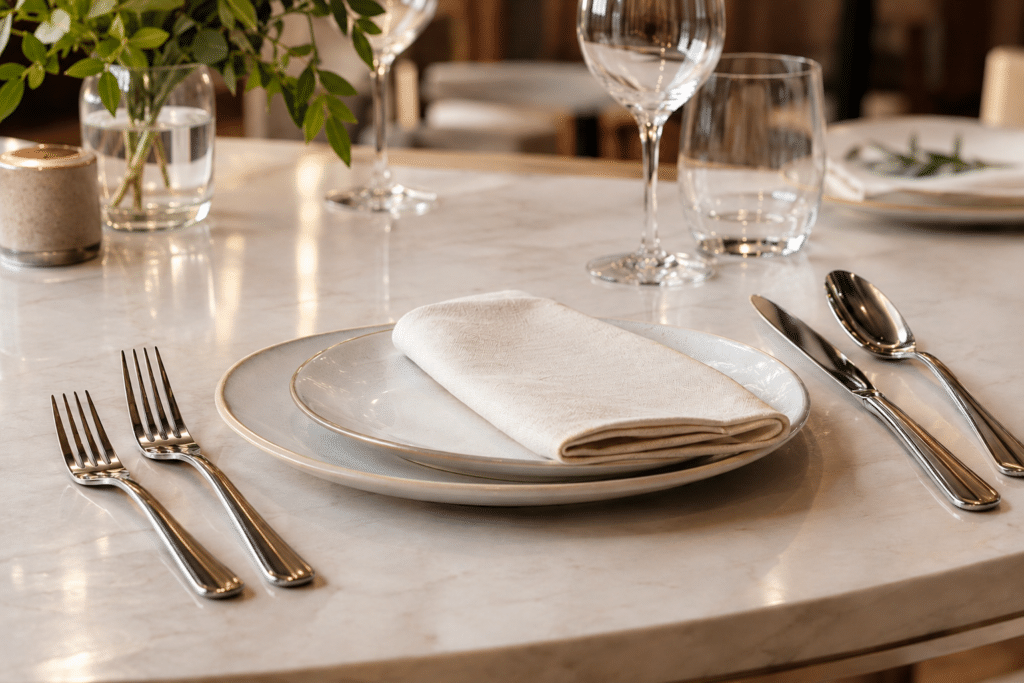
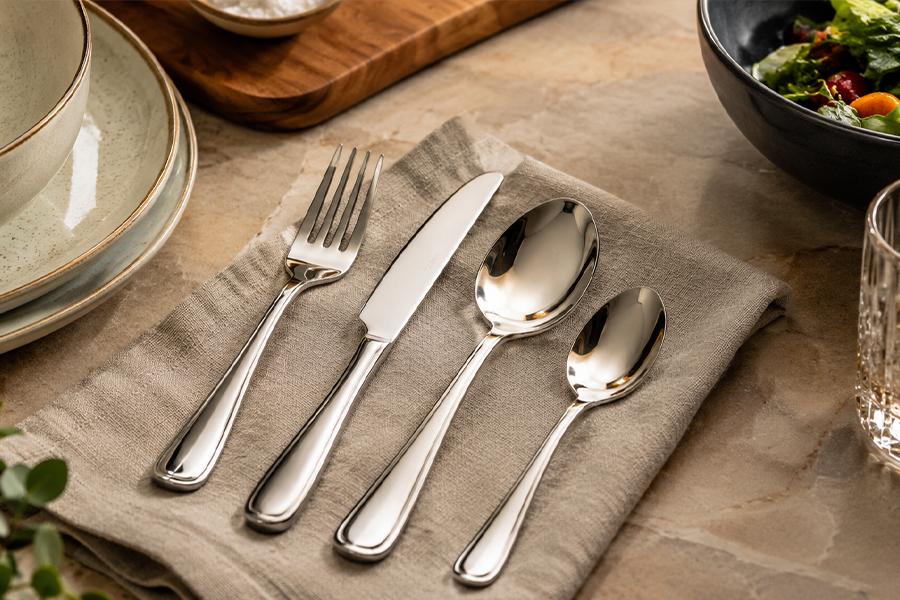
Cutlery is one of the most frequently used objects in any dining environment.
It is picked up, held, washed, polished, stored and reused every single day. In hotels and restaurants, this cycle can happen hundreds or even thousands of times.
That is why choosing cutlery should never be based on appearance alone.
The best cutlery brands in India are not simply the ones producing attractive designs. They are the ones able to combine material quality, thoughtful proportions, durability, manufacturing consistency and long-term usability.
Whether the requirement is for a luxury hotel, fine-dining restaurant, banquet operation or hospitality group, these are the qualities that separate ordinary cutlery from genuinely well-made cutlery.
Material Quality Comes First
Good cutlery begins with good material.
Stainless steel is one of the most widely used materials in professional hospitality because it offers strength, corrosion resistance and relatively easy maintenance.
However, stainless steel quality can vary considerably.
The composition of the steel influences how the cutlery responds to moisture, detergents, acids and repeated commercial washing.
This is why hospitality buyers should pay attention to stainless steel grade and material specification rather than relying only on visual appearance.
A well-made spoon or fork should maintain its surface and structural integrity after repeated use.
The quality of the material becomes even more important in environments where cutlery may be washed several times a day.
Good Cutlery Should Feel Balanced
Cutlery is a tactile product.
The way it feels in the hand can immediately influence the perception of quality.
A well-designed fork should not feel excessively light at the head or handle. A knife should sit comfortably in the hand. A spoon should feel proportionate and easy to control.
Balance is often what distinguishes thoughtfully designed cutlery from purely decorative pieces.
The best cutlery brands in India pay attention to ergonomics as much as aesthetics.
This becomes particularly important for hospitality businesses because guests may interact with the same cutlery throughout a long meal.
A beautiful design that feels awkward in the hand quickly loses its appeal.
Weight Influences Perceived Quality
Weight is another important consideration.
Very lightweight cutlery can sometimes feel inexpensive even when the finish itself looks attractive.
At the same time, excessively heavy cutlery may feel uncomfortable during longer dining experiences.
The goal is not simply to create heavy cutlery.
It is to create a sense of substance without compromising comfort.
For luxury hospitality environments, slightly heavier pieces can often create a more premium impression, especially when paired with refined tableware and glassware.
For high-volume restaurants and banquets, a more practical balance between weight, durability and cost may be more appropriate.
Design Should Complement the Table
Good cutlery should support the dining environment rather than compete with it.
This is where design becomes important.
Minimal, clean-lined cutlery can work beautifully in contemporary restaurants. More substantial profiles may suit formal hotels and classic dining rooms. Matte or sculptural designs may work in modern concepts where the table setting itself is part of the visual identity.
The design should be considered alongside:
tableware, glassware, linen, tabletop accessories, plating style and restaurant interiors.
When these elements work together, the table feels coherent.
This is one of the reasons strong cutlery brands tend to develop collections rather than isolated pieces.
A collection creates continuity across forks, knives, spoons and service accessories.
Finish Changes the Character of Cutlery
The same cutlery shape can feel completely different depending on the finish.
Mirror-polished stainless steel feels classic and formal.
Satin or brushed finishes create a softer and more contemporary appearance.
Matte finishes can feel understated and architectural.
PVD finishes such as gold, rose gold and black allow restaurants and hotels to create a more distinctive visual language.
There is no single finish that is automatically better.
The best choice depends on the concept, maintenance requirements and frequency of use.
What matters is how well the finish has been applied and how consistently it can be reproduced.
For hospitality buyers, consistency across a large order is essential.
Durability Matters More Than First Impressions
Cutlery that looks excellent on the first day but begins to deteriorate after a few months is not a good hospitality investment.
Professional cutlery must withstand continuous use.
It should resist bending, corrosion, surface wear and premature loss of finish.
This is why durability is one of the most important characteristics separating the best cutlery brands in India from less reliable alternatives.
Hotels and restaurants should ideally evaluate products after considering how they will behave under actual service conditions.
Commercial washing, contact with acidic foods, polishing, stacking and transportation all place stress on cutlery.
A strong product is designed with those realities in mind.
Manufacturing Consistency Is Critical
Consistency becomes especially important when cutlery is being purchased in bulk.
A restaurant may require hundreds of identical pieces.
A hotel may need thousands.
If the weight, polish or dimensions vary noticeably across pieces, the inconsistency can become visible at the table.
Reliable cutlery brands pay close attention to manufacturing tolerances and quality control.
Every fork in a collection should feel like part of the same range.
Every knife should have a similar finish.
Every spoon should maintain the same dimensions and balance.
For hospitality businesses, this level of consistency directly affects presentation.
The Full Collection Matters
Cutlery purchasing often begins with the basic table setting, but the requirement usually extends far beyond it.
Hotels and restaurants may also need dessert forks, teaspoons, soup spoons, steak knives, serving spoons, serving forks, cake forks and specialised service pieces.
This is why a strong cutlery brand should ideally offer a complete collection.
It helps hotels avoid mixing unrelated designs across different courses or service moments.
It also makes future expansion easier.
A restaurant may begin with a basic collection and later add banquet service, dessert service or additional outlets.
A wider product family creates more flexibility.
Replacement Availability Is Often Overlooked
Cutlery disappears.
It gets damaged, misplaced or transferred between outlets.
Over time, additional pieces are almost always required.
This makes long-term availability an important part of choosing a cutlery brand.
If a design is discontinued quickly, hospitality businesses may be forced to mix different collections or replace the entire set.
A reliable brand should therefore be able to support repeat orders where possible.
For hotels and restaurant groups, this can be one of the most valuable aspects of a long-term supplier relationship.
Customisation Can Add Character
Some hospitality businesses want their cutlery to feel more distinctive.
This may involve logo engraving, custom finishes, altered proportions or bespoke designs.
Customisation works best when it is subtle.
A carefully engraved logo or unique finish can reinforce the identity of a hotel or restaurant without making the cutlery feel overly branded.
The strongest cutlery manufacturers are able to balance customisation with usability.
The product still needs to feel comfortable, durable and appropriate for professional service.
Price Should Be Evaluated Over Time
Cutlery is often compared using unit price.
That makes sense, especially when ordering in large quantities.
However, the lowest purchase price does not always result in the lowest long-term cost.
If inexpensive cutlery bends, stains, loses finish or requires frequent replacement, the total expense can become significantly higher over time.
Better-quality cutlery may require a larger initial investment but deliver stronger value through longer usable life and more consistent performance.
For hotels and restaurants, the more useful question is not:
“Which option is cheapest?”
It is:
“Which option delivers the best value over repeated service?”
Good Cutlery Reflects the Dining Experience
Cutlery is one of the few design elements that guests physically hold throughout a meal.
That makes it an important part of the dining experience.
A well-balanced fork, a substantial knife or a beautifully finished spoon can reinforce the quality of the food and the overall setting without drawing unnecessary attention to itself.
The best cutlery feels natural.
It works quietly in the background while supporting the experience around it.
Final Thoughts
The best cutlery brands in India are defined by far more than surface appearance.
Material quality, balance, weight, finish, durability, manufacturing consistency and replacement availability all contribute to long-term performance.
For hospitality businesses, cutlery should be treated as both an aesthetic decision and an operational one.
The right collection should look appropriate on the table, feel comfortable in the hand and continue to perform reliably through repeated service.
Venus Industries manufactures and supplies stainless steel cutlery for hotels, restaurants, banquets and hospitality businesses, with collections designed around professional use, consistent production and bulk requirements.