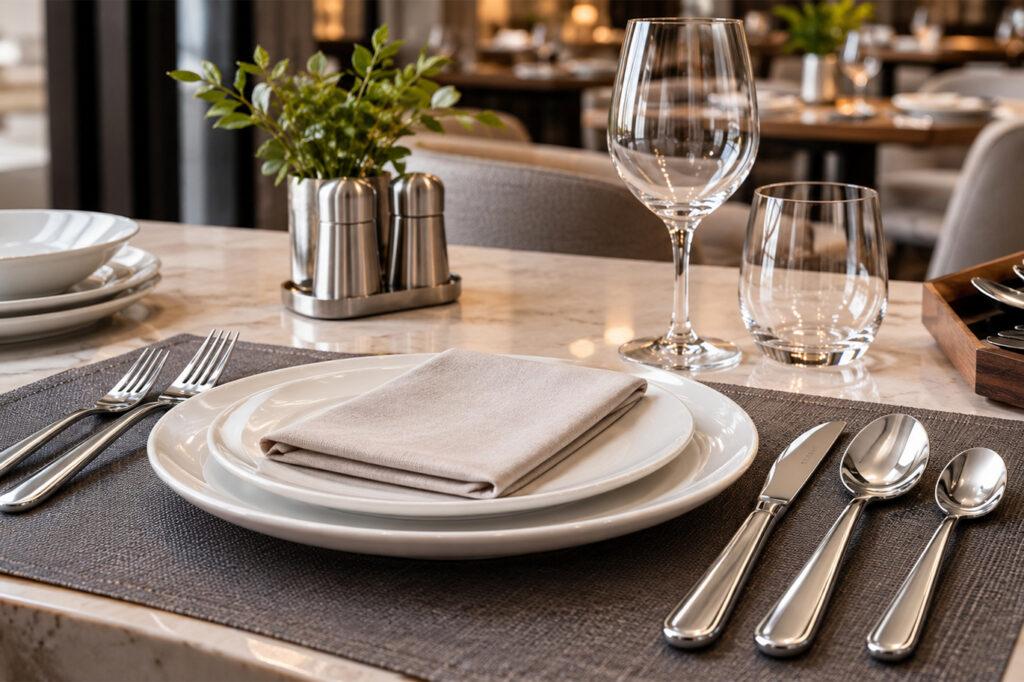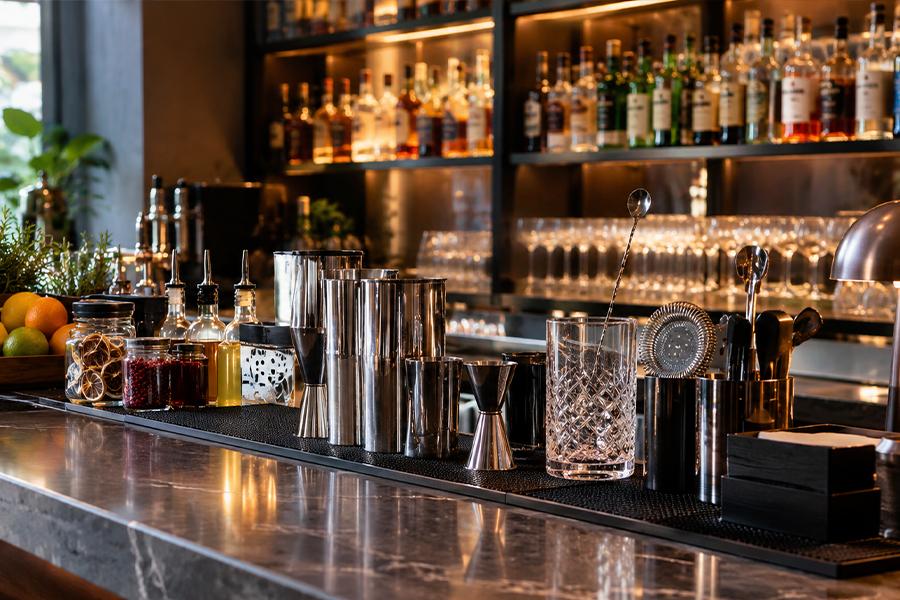
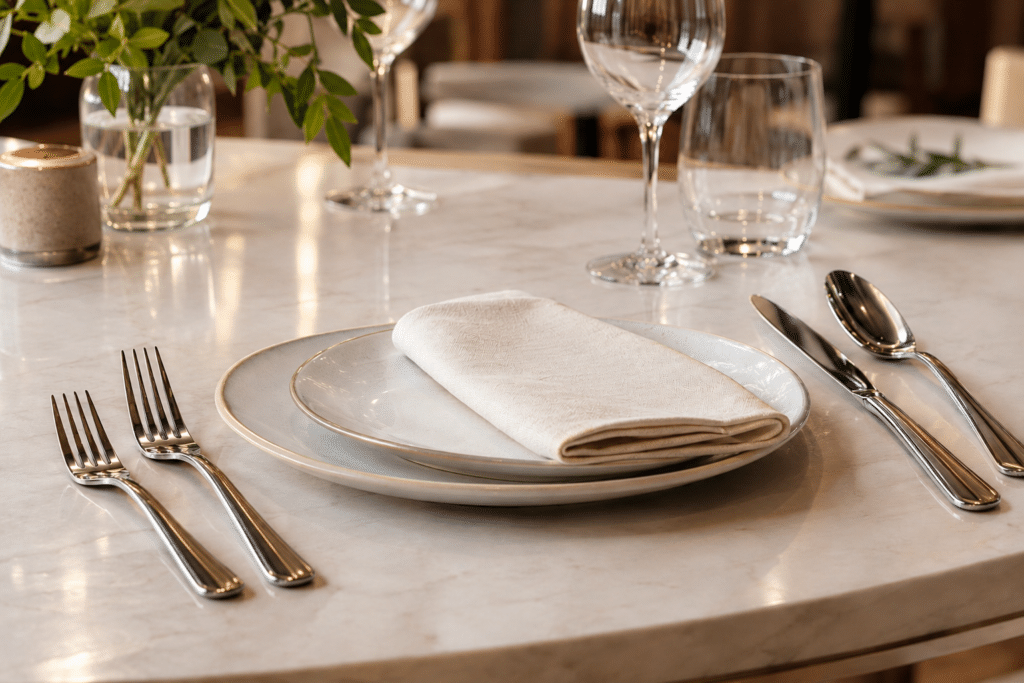
Most cutlery looks good when it is new.
The real difference appears after months of service.
In a hotel, restaurant or banquet operation, cutlery is washed repeatedly, handled by multiple teams, stacked, polished, moved between service areas and used by hundreds of guests.
That is where quality begins to show.
For hospitality buyers comparing the best cutlery brands in India, the question should not simply be which collection looks premium in a catalogue.
The more useful question is this:
Will the cutlery still feel, look and perform well after repeated commercial use?
That distinction separates good cutlery from great cutlery.
Great Cutlery Feels Right Before You Even Notice the Design
Cutlery is one of the few hospitality products a guest physically holds throughout the meal.
That makes touch just as important as appearance.
A fork should feel balanced.
A knife should sit comfortably in the hand.
A spoon should not feel too thin, too light or awkwardly weighted.
Good cutlery may look attractive on the table.
Great cutlery also feels natural during use.
This tactile quality is often one of the first things hospitality buyers notice when comparing physical samples.
It is also why cutlery should never be selected only from photographs.
Material Quality Shows Over Time
Stainless steel remains one of the most widely used materials in hospitality cutlery because it combines durability, corrosion resistance and practical maintenance.
However, two pieces of stainless steel cutlery can perform very differently.
Material grade, thickness and manufacturing quality all matter.
A piece may look polished and premium when it is first delivered, but if the steel quality is poor, problems may appear after repeated washing.
The finish may deteriorate faster.
The structure may feel weak.
Staining or corrosion resistance may also be compromised.
This is why buyers comparing the best cutlery brands in India should always ask about material specification, not just finish.
Weight Should Feel Intentional
Weight contributes strongly to how cutlery is perceived.
Very lightweight pieces can feel less substantial.
At the same time, excessively heavy cutlery can become uncomfortable.
Great cutlery finds the right balance.
Fine-dining restaurants may prefer slightly heavier pieces because they feel more luxurious.
Banquets and all-day dining restaurants may choose something more practical for high-volume handling.
The right weight depends on the service format.
What matters is that the piece feels considered rather than accidental.
Balance Is More Important Than Heaviness
There is a common assumption that heavier cutlery automatically means better cutlery.
That is not always true.
A heavy knife that is poorly balanced can feel less comfortable than a lighter, well-designed one.
The same applies to forks and spoons.
Balance determines how naturally the piece sits in the hand.
This becomes especially important during longer meals.
A guest may not consciously analyse why a piece of cutlery feels good, but the difference still contributes to the overall dining experience.
Great cutlery gets this right quietly.
The Finish Should Suit the Environment
Finish can dramatically change the personality of cutlery.
Mirror-polished stainless steel works well in classic hospitality settings.
Brushed and satin finishes feel softer and more contemporary.
Matte finishes can create a restrained, modern look.
Gold, black, rose gold and other specialised finishes can give premium restaurants a more distinctive identity.
But great cutlery is not defined by a fashionable finish alone.
The finish should make sense for the restaurant concept and remain practical to maintain.
A dramatic surface treatment that becomes difficult to clean may create more problems than value.
The best cutlery brands in India should be able to balance visual appeal with the realities of commercial use.
Great Cutlery Works With the Table, Not Against It
Cutlery is only one part of the dining environment.
It needs to work with crockery, glassware, linen, furniture, interiors and food presentation.
A beautiful cutlery design can still feel wrong if it does not suit the overall concept.
Minimal cutlery may work beautifully in a contemporary restaurant.
A more substantial design may suit a luxury hotel.
A matte or darker finish may feel more appropriate in a modern cocktail-led space.
Great cutlery supports the table setting rather than trying to dominate it.
The strongest dining environments feel cohesive because every element appears to belong together.
Durability Is Where Quality Becomes Visible
Hospitality exposes cutlery to constant wear.
It may pass through commercial dishwashers several times a day.
It is stacked, polished, dropped and moved repeatedly.
A collection that looks impressive during initial presentation may not necessarily perform well over time.
This is where great cutlery separates itself.
It should maintain its structure and finish despite repeated service.
It should not bend too easily.
It should not become uncomfortable after prolonged use.
Its appearance should remain consistent with proper maintenance.
For hotels and restaurants, this matters because frequent replacement quickly increases cost.
Consistency Matters Across Hundreds of Pieces
Hospitality buyers rarely purchase one or two pieces.
They may order hundreds or thousands.
That makes manufacturing consistency extremely important.
Every fork in a collection should have the same finish and proportions.
Every spoon should feel similar.
Every knife should maintain consistent weight and balance.
Small variations can become very noticeable when the products appear together across dozens of tables.
This is one reason the best cutlery brands in India need strong quality control in addition to good design.
The larger the order, the more important consistency becomes.
The Collection Should Extend Beyond the Basics
A strong cutlery range should offer more than a table fork, knife and spoon.
Hotels and restaurants may also require dessert forks, teaspoons, soup spoons, steak knives, cake forks and serving pieces.
Fine-dining restaurants may need more specialised formats depending on the menu.
A complete collection helps maintain a consistent table language.
It also makes future expansion easier.
A restaurant may begin with a basic service and add new courses later.
A hotel may expand banquet capacity.
A new outlet may require additional formats.
Great cutlery brands understand that hospitality requirements evolve.
Replacement Availability Is Part of Quality
A cutlery collection can be beautifully made and still become a poor procurement choice if it cannot be reordered.
Cutlery is lost regularly in hotels and restaurants.
Pieces may also become damaged or redistributed across outlets.
Replacement is inevitable.
This means long-term availability should be considered before the initial order is placed.
The ability to reorder matching pieces can save hotels from having to replace complete sets later.
For restaurant groups and hotel chains, this can be especially important.
Great hospitality cutlery should not only perform well today. It should also remain practical to support tomorrow.
Maintenance Should Be Realistic
The most beautiful cutlery is of little use if maintaining it becomes too difficult for the property.
Hotels should understand how each finish should be washed, dried and stored.
Specialised metallic finishes may require more careful handling.
Mirror finishes may need more polishing.
Matte finishes may show marks differently.
The correct choice depends on the hotel’s actual back-of-house systems.
Great cutlery works with the operation rather than creating unnecessary complexity.
Customisation Should Add Identity, Not Noise
Premium hotels and restaurants may choose customised cutlery to create a more distinctive table setting.
This could involve logo engraving, a special finish or a bespoke design detail.
Done well, customisation can strengthen the identity of the dining experience.
Done poorly, it can make the product feel promotional.
The best customisation is often subtle.
A small detail can be enough to make the cutlery feel specific to the property.
Function should always remain the priority.
Great Cutlery Is Not Necessarily the Most Expensive
Price can indicate material, design or manufacturing complexity, but it is not a guarantee of suitability.
An expensive collection may still be wrong for a high-volume banquet operation.
A simpler range may perform better in daily service.
The right question is not:
Which cutlery costs the most?
It is:
Which cutlery delivers the best combination of quality, performance, design and longevity for this particular hospitality environment?
That is the more useful way to compare the best cutlery brands in India.
Hospitality Experience Makes a Difference
Cutlery designed for occasional domestic use and cutlery designed for professional hospitality have different requirements.
Commercial environments demand consistency, repeat availability, bulk production and durability.
Manufacturers working closely with hotels and restaurants are more likely to understand these expectations.
They understand that appearance is only one part of the decision.
Service life matters.
Replacement matters.
Commercial washing matters.
Large-volume consistency matters.
For hospitality buyers, that industry experience should be part of the brand evaluation.
Final Thoughts
Good cutlery can make a strong first impression.
Great cutlery continues to perform long after that first impression.
It feels balanced in the hand, suits the table setting, maintains its finish, performs reliably through repeated service and remains available when replacements are needed.
For hospitality businesses comparing the best cutlery brands in India, these are the factors that matter most.
Cutlery should not simply look premium.
It should behave like a professional hospitality product.
Venus Industries manufactures and supplies cutlery and hotelware for hotels, restaurants, banquets and professional hospitality businesses, with collections designed for both high-volume service and premium dining environments.