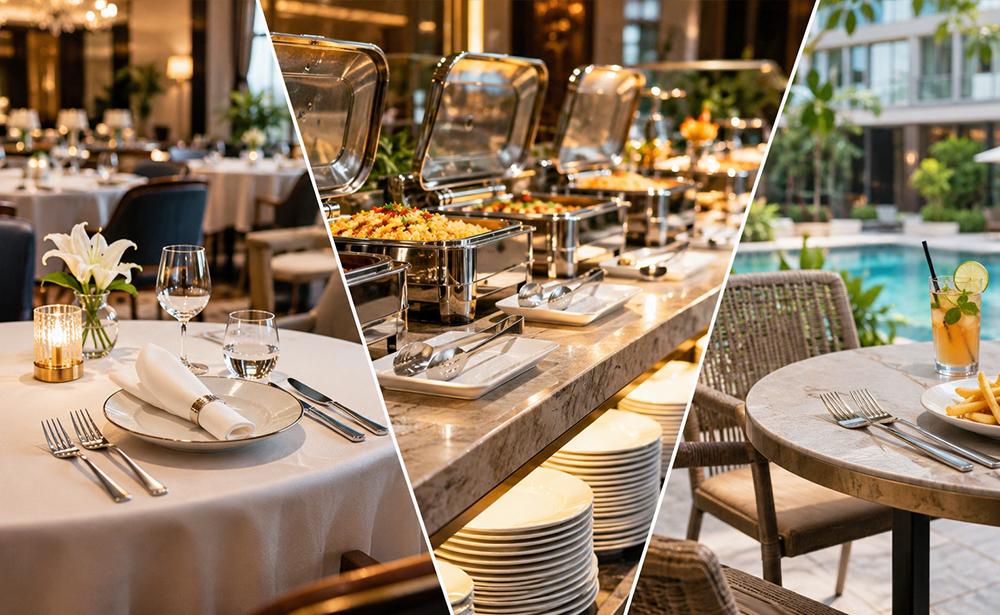
A guest ordering breakfast, attending a wedding banquet and dining at a signature restaurant may experience three completely different sides of the same hotel.
The interiors change.
The food changes.
The pace of service changes.
And the cutlery should often change too.
Yet hospitality procurement sometimes treats cutlery as one standard requirement across the property.
That approach may simplify ordering, but it can also create compromises.
For hotels comparing hotel cutlery set wholesale suppliers in India, it is more useful to think about how cutlery needs change according to the service environment.
Daily Dining Is About Reliable Performance
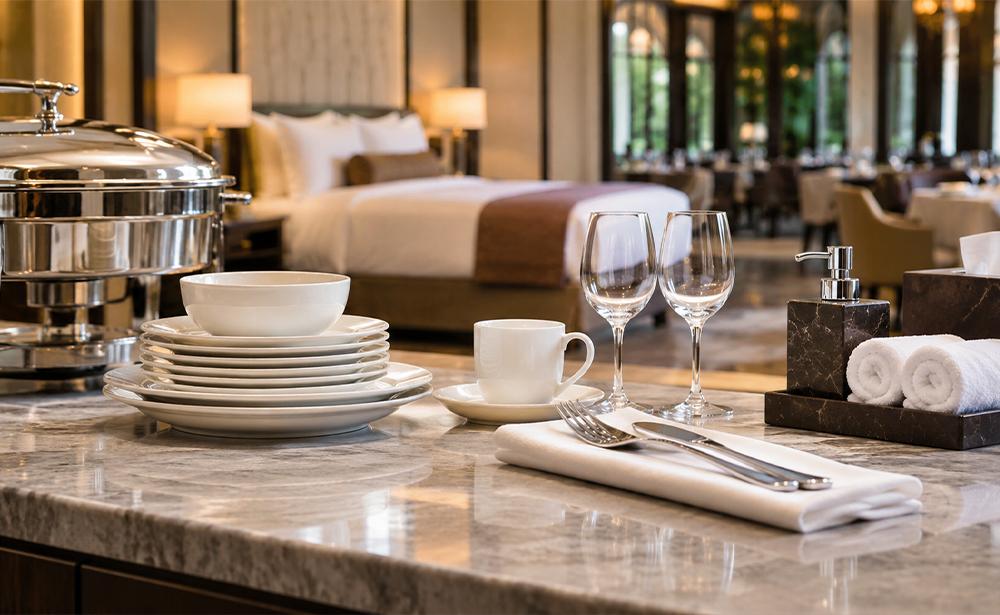
Breakfast and all-day dining outlets are among the hardest-working areas in a hotel.
Cutlery is constantly moving.
A piece may be used at breakfast, washed, polished and returned to service again before lunch.
That means daily dining needs products that can tolerate repetition without becoming difficult to maintain.
The design should be versatile enough to work across breakfast buffets, casual lunches and dinner service.
Weight matters too.
A piece should feel substantial enough to reflect the hotel’s standards, but it should not become unnecessarily heavy for staff handling hundreds of covers every day.
Daily dining is where practical design often performs better than overly elaborate design.
Banquets Need a Different Kind of Quality
Banquet service is about scale.
A single event may require hundreds of identical place settings.
A large property may run multiple functions on the same evening.
That changes the procurement priorities.
Consistency becomes extremely important.
When hundreds of forks, knives and spoons appear together across a ballroom, differences in finish or proportions become visible.
Banquet cutlery also needs to be easy to store, count, transport and replace.
This is where durability and repeat availability can be more valuable than distinctive design.
The best banquet cutlery works across weddings, conferences, gala dinners and corporate events without feeling out of place.
Fine Dining Is More Tactile
Fine dining creates space for greater attention to detail.
Guests notice the table more closely.
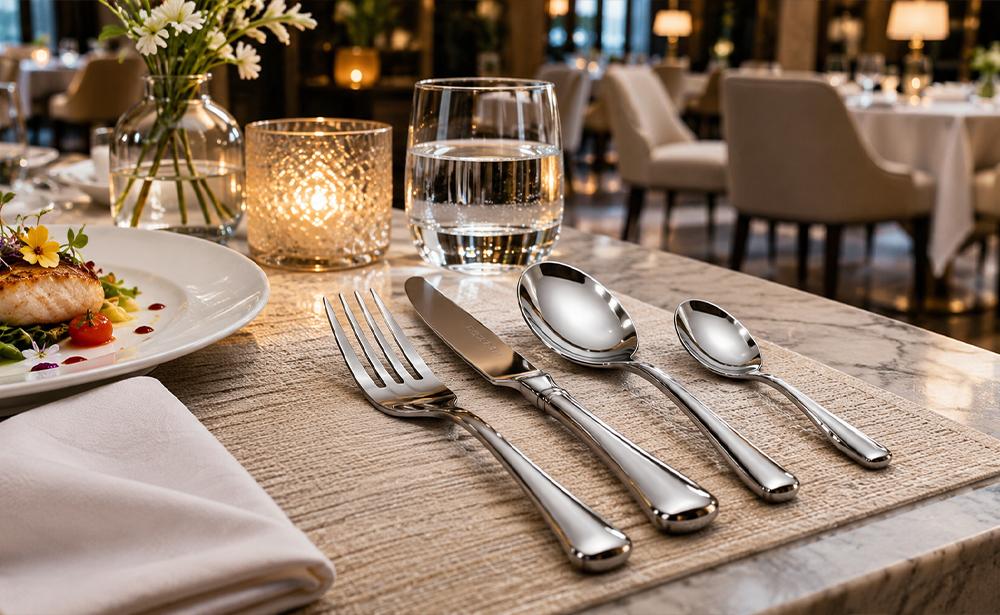
The weight of the knife, the shape of the fork and the finish of the spoon become part of the overall experience.
A signature restaurant may therefore use heavier or more distinctive cutlery than the hotel’s all-day dining outlet.
But premium does not mean excessive.
The cutlery should still feel comfortable and intuitive.
A design that attracts too much attention can compete with the food.
Fine-dining cutlery works best when it supports the atmosphere quietly.
One Collection Everywhere Is Not Always Efficient
Using the same cutlery throughout the hotel can appear efficient.
In practice, it may mean compromising everywhere.
The range that works well for banquet service may feel too generic in the signature restaurant.
A premium fine-dining collection may be unnecessarily costly and difficult to manage in an all-day dining environment.
A better strategy is often to create a hierarchy.
The daily restaurant can use a versatile core range.
Banquets can use a scalable, durable collection.
The fine-dining outlet can use a more refined range.
The collections can still share a common design sensibility without being identical.
The Quantity Calculation Changes Too
Different outlets also require different stock levels.
A restaurant with 120 seats does not simply need 120 forks.
Some pieces will be on tables. Others will be in the wash. Some will be waiting for polishing. Additional stock needs to remain available during peak periods.
Banquets need even larger buffers because several events may overlap.
Fine-dining restaurants may use more cutlery per cover because different courses require different pieces.
This is why hotel cutlery set wholesale suppliers in India should be evaluated not only on product range but also on their understanding of hospitality service cycles.
Finish Should Follow Function
Each dining format may also justify a different finish.
A polished collection may suit banquets because of its versatility.
A brushed or satin finish may work well in an all-day dining restaurant with contemporary interiors.
A signature restaurant may choose matte, dark or specialised metallic finishes.
However, every finish has an operational cost.
The hotel needs to consider how easily it can be cleaned, polished and replaced.
Design should never be separated from maintenance.
Replacement Is Inevitable
The more outlets a hotel operates, the more important replacement planning becomes.
Cutlery moves between departments.
Pieces disappear.
Banquet stock can be especially difficult to track.
The hotel should therefore choose collections that can be reordered reliably.
This is also where standardisation can help.
Using a smaller number of dependable collections across similar outlets can make future procurement much easier.
Final Thoughts
Hotels do not serve every guest in the same way.
Their cutlery strategy should reflect that.
Daily dining needs dependable performance. Banquets need scale and consistency. Fine dining needs greater attention to tactile quality and presentation.
For hotels comparing hotel cutlery set wholesale suppliers in India, the best question is not, “Which collection should we buy?”
It is, “Which collection belongs in each part of our hotel?”
Venus Industries manufactures and supplies hospitality cutlery and hotelware for hotels, restaurants, banquets and professional food-service environments, supporting both high-volume and premium dining requirements.