Hospitality procurement can easily become a catalogue exercise.
A hotel needs cutlery, buffetware, chafing dishes, serving pieces and bar accessories. Product options are shortlisted, prices are compared and orders are placed.
But a good hotelware partnership involves much more than choosing products from pages.
The manufacturer needs to understand how those products will actually live inside a hotel.
They need to understand service frequency, washing, storage, banquet volumes, replacement requirements and the relationship between design and operations.
For hotels evaluating a hotelware manufacturer in India, these capabilities often matter more than the number of products in the catalogue.
Hospitality Products Live Hard Lives
Hotelware is used repeatedly.
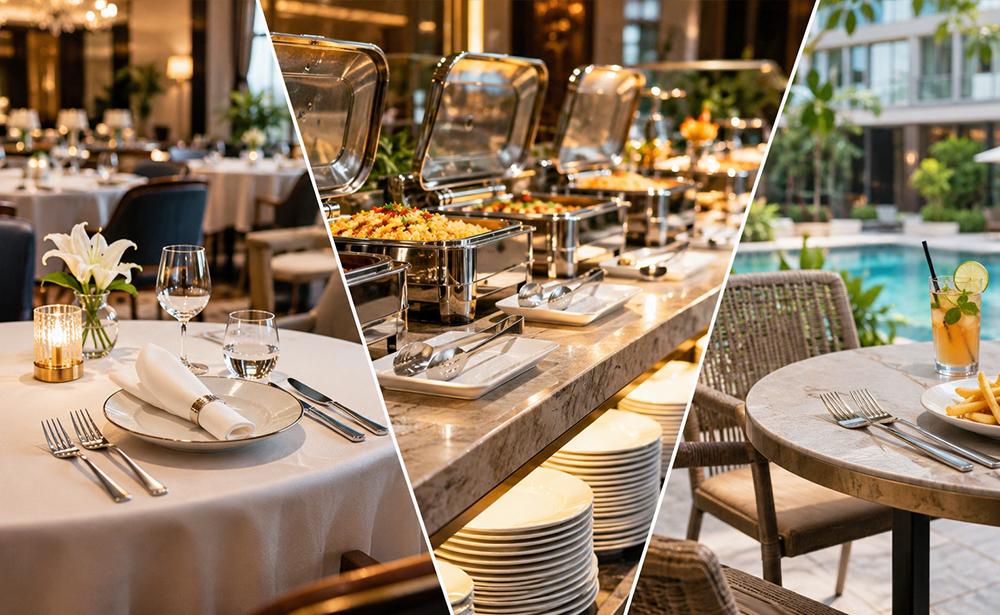
Breakfast buffets run every morning. Restaurants operate throughout the week. Banquets can serve hundreds of people in a few hours. Barware is exposed to moisture, citrus and repeated handling.
Products need to survive this environment.
That requires more than attractive finishing.
Material, construction and practical design all matter.
A hotelware manufacturer with real hospitality experience is more likely to understand where products usually fail and how they need to perform in commercial service.
The Catalogue Should Be the Starting Point, Not the Decision
A wide product range is useful because hotels often need several categories at the same time.
But buyers should look beyond the photograph.
A chafing dish should be tested for lid movement and stability.
A tray should feel comfortable when loaded.
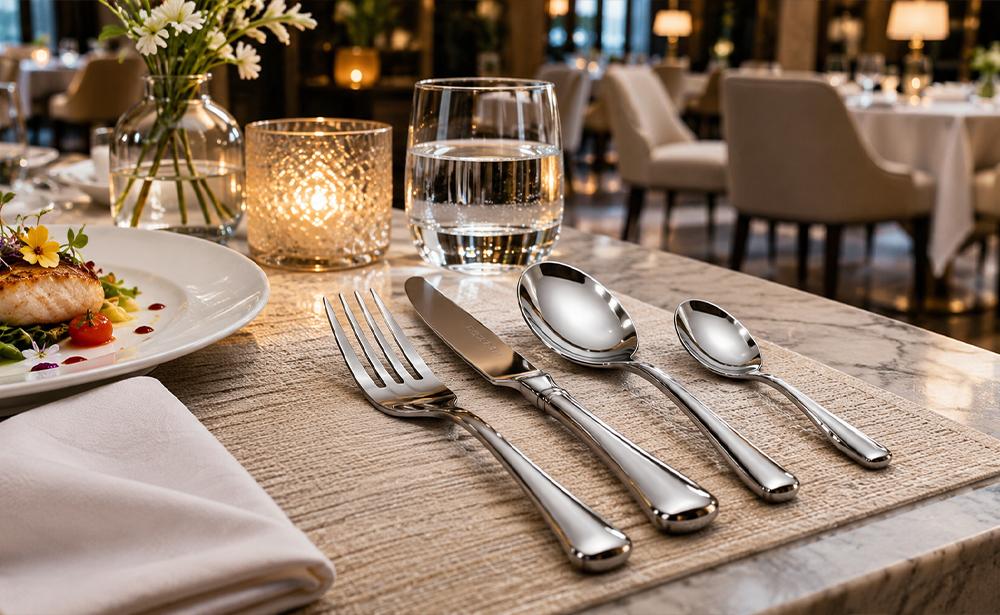
Cutlery should be judged by weight and balance.
Bar accessories should feel practical during actual use.
This is why samples are so important.
Hotels should treat the catalogue as a discovery tool and the sample as the real evaluation.
Design Has Become More Important in Hospitality Procurement
Hotels no longer view hotelware purely as equipment.
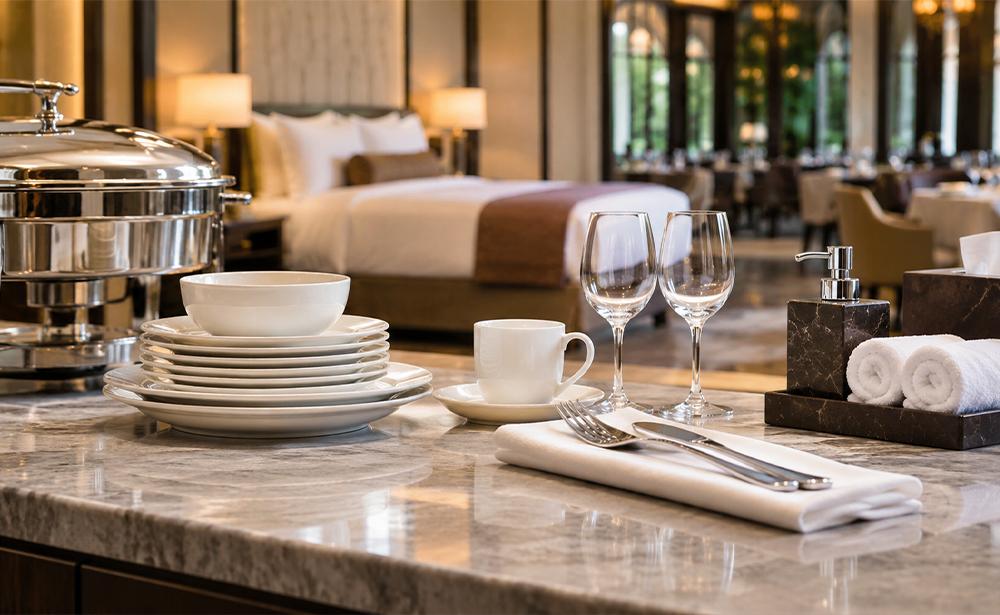
It is increasingly part of the design language.
A buffet is part of the restaurant interior.
Cutlery becomes part of the tabletop.
Bar accessories remain visible during cocktail service.
Serveware contributes to how food is presented.
This means the manufacturer needs to understand not only function but also visual consistency.
A strong hotelware manufacturer in India should be able to work across different aesthetics, from polished and classic to matte, contemporary and more design-led finishes.
A Hotel Should Look for a Material Language
One of the best ways to create a more refined hospitality environment is to think about materials across categories.
Cutlery, buffetware and bar accessories do not need to match exactly, but they should feel connected.
A hotel using warmer metallic tones in its restaurant may want selected serving pieces to follow the same direction.
A contemporary property using brushed metal and neutral interiors may prefer a more restrained hotelware palette.
This creates consistency without making the environment feel overly coordinated.
A manufacturer that works across multiple categories can make this easier.
Customisation Is Valuable When It Has a Purpose
Customisation can be powerful in hospitality, but it should not become decoration for its own sake.
An engraved logo, bespoke dimension or specialised finish can make a product feel specific to the property.
The question is whether it improves the experience.
A custom buffet riser may solve a presentation problem.
A particular tray dimension may work better with room service.
A subtle engraving may reinforce the identity of a signature restaurant.
The strongest customisation begins with a functional or brand requirement rather than simply a desire to make something different.
Production Capability Matters Behind the Design
Beautiful samples mean little if the manufacturer cannot reproduce them consistently at scale.
Hotels may need hundreds or thousands of pieces.
The manufacturer needs to maintain finish, dimensions and construction across the order.
Lead times also matter.
New hotel openings operate against fixed project schedules.
A delay in one category can disrupt the readiness of a restaurant, banquet area or bar.
Hotels should therefore ask direct questions about production capacity and realistic timelines.
Repeat Orders Are the Real Test of the Relationship
The first order is only the beginning.
Hotelware gets damaged.
Products are lost.
Banquet capacity grows.
New outlets open.
A hotel may need to reorder the same product years later.
This is where a strong manufacturer relationship becomes valuable.
The ability to reproduce an established product or provide a close match can save a hotel from replacing an entire category unnecessarily.
Long-term continuity should therefore be discussed before the first bulk order is confirmed.
Price Needs Context
Price will always matter in hospitality procurement.
But unit price alone can be misleading.
A product that costs less initially but needs constant replacement may be more expensive over time.
A product that is difficult to maintain may increase operational workload.
A collection that cannot be reordered may create unnecessary future expenditure.
A stronger comparison considers total value.
That includes quality, life, maintenance, repeat supply and manufacturer support.
Final Thoughts
The right hotelware manufacturer in India should offer more than a broad catalogue.
They should understand how hospitality products are used, maintained, replaced and integrated into the guest experience.
Hotels should look for material knowledge, design capability, manufacturing consistency, customisation and long-term supply.
Good hotelware is not simply something the property buys.
It becomes part of how the hotel operates every day.
Venus Industries manufactures and supplies professional hotelware for hotels, restaurants, banquets and hospitality businesses across cutlery, buffetware, serveware, barware and related categories.