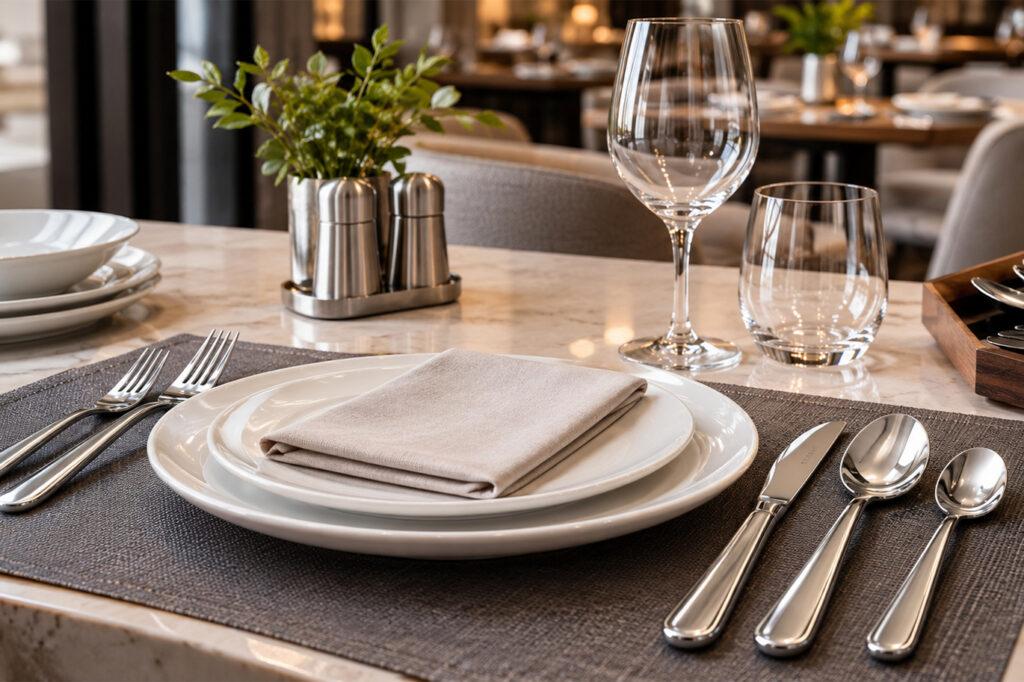
Cutlery may seem like one of the smaller details in a hotel or restaurant setup, but it plays a surprisingly important role in the overall dining experience.
Guests interact with it throughout the meal. Its weight, balance, finish and feel all contribute to how the table is perceived. At the same time, hospitality businesses need cutlery that can withstand repeated washing, heavy daily use and frequent replacement cycles.
This makes choosing the right stainless steel cutlery a practical as well as aesthetic decision.
For hotels, restaurants, banquets and catering businesses working with bulk stainless steel cutlery suppliers, the right choice should balance durability, design, maintenance and long-term value.
Here are the most important factors to consider.
1. Start With the Grade of Stainless Steel
Not all stainless steel cutlery is the same.
The composition of the steel affects its resistance to corrosion, staining, wear and everyday use.
Hospitality-grade cutlery is commonly produced using stainless steel combinations designed to offer strength and ease of maintenance.
You may often come across terms such as:
- 18/10 stainless steel
- 18/8 stainless steel
- 18/0 stainless steel
These numbers broadly refer to the proportions of chromium and nickel used in the alloy.
Higher nickel content generally improves resistance to corrosion and helps create a brighter, more refined finish.
However, the best choice depends on where and how the cutlery will be used.
A premium fine-dining restaurant may prioritise finish, feel and polish, while a high-volume banquet operation may focus more heavily on durability, consistency and replacement cost.
2. Pay Attention to Weight and Balance
Good cutlery should feel comfortable in the hand.
It should not feel excessively light, but it should also not become uncomfortable during a long meal.
Weight is particularly important in hotels and restaurants because it influences perceived quality.
Very lightweight cutlery can sometimes feel less premium, even if the design itself is attractive.
On the other hand, heavier cutlery can communicate a stronger sense of quality, provided it is properly balanced.
When reviewing samples from bulk stainless steel cutlery suppliers, hold each piece as a guest would.
Check whether the fork feels balanced.
See whether the knife sits comfortably in the hand.
Notice whether the spoon feels proportionate.
Small ergonomic details can make a noticeable difference in the dining experience.
3. Match the Design to the Restaurant Concept
Cutlery should complement the overall table setting rather than compete with it.
A contemporary restaurant may work well with clean, minimal shapes.
A luxury hotel may prefer more substantial profiles and refined detailing.
A modern Indian restaurant might choose something warmer or more expressive.
A café or casual dining format may need something simple, functional and easy to replace.
The design should align with:
- tableware
- glassware
- linen
- tabletop accessories
- service style
- overall interior language
This creates visual consistency across the guest experience.
Cutlery should feel like part of the restaurant’s design system, not an afterthought.
4. Choose the Right Finish
The finish of stainless steel cutlery can completely change how it looks on the table.
Popular finishes include:
Mirror Finish
Highly polished and reflective.
This works well for classic dining settings, banquet environments and hospitality spaces that want a traditional polished appearance.
Satin Finish
Softer and less reflective.
It creates a more understated and contemporary look.
Matte Finish
Often used in modern restaurants where the table setting needs to feel more architectural or design-led.
PVD Finishes
Finishes such as gold, rose gold, black or other metallic tones can create a stronger visual identity.
These are often selected for premium restaurants, bars and event settings.
The right finish should be chosen not only for appearance but also for maintenance.
High-polish finishes may show fingerprints and water marks more easily, while textured or matte finishes may require different care.
5. Think About Commercial Washing and Maintenance
Restaurant cutlery is exposed to far more wear than household cutlery.
It may pass through commercial dishwashers several times a day.
It may come into contact with acidic foods, detergents, heat and prolonged moisture.
This means maintenance requirements should be discussed before placing a bulk order.
Ask the supplier about:
- dishwasher compatibility
- recommended detergents
- drying requirements
- polishing requirements
- storage methods
- care for specialised finishes
Proper handling can significantly extend the usable life of stainless steel cutlery.
6. Consider the Full Cutlery Range
A restaurant rarely needs only a fork, knife and spoon.
Depending on the menu and service format, the complete requirement may include:
- table forks
- table knives
- table spoons
- dessert forks
- dessert spoons
- teaspoons
- soup spoons
- steak knives
- fish knives
- serving spoons
- serving forks
- cake forks
- specialised service pieces
It is useful to choose a design range that offers all the pieces you are likely to need.
This helps maintain consistency across the table and avoids having to mix multiple collections later.
7. Evaluate Replacement Availability
One of the most overlooked factors in hospitality procurement is replacement.
Cutlery gets lost.
Pieces are damaged.
Inventory moves between outlets.
Hotels and restaurant groups may also expand over time.
If the chosen design becomes unavailable, replacing individual pieces can become difficult.
Before placing a large order, ask your supplier whether the collection is likely to remain available and whether repeat orders can be matched closely in terms of finish, weight and dimensions.
Reliable replacement supply can be more valuable than saving a small amount on the initial purchase.
8. Understand Your Required Quantity
Bulk ordering should be based on actual operational requirements.
A common mistake is to calculate cutlery only according to seating capacity.
In reality, restaurants require additional inventory because pieces may simultaneously be:
- in use
- waiting to be cleared
- in the wash
- being polished
- stored for the next service
- held as backup stock
Hotels and banquets may require even larger multiples because of simultaneous events and high-volume service.
An experienced supplier can help determine quantities based on seat count, service style and operating frequency.
9. Ask About Customisation
For premium hospitality businesses, customisation can make the table setting more distinctive.
Depending on manufacturing capability, customisation may include:
- engraved logos
- customised finishes
- unique proportions
- specialised handle detailing
- exclusive designs
- coordinated service pieces
Custom cutlery can be particularly valuable for luxury hotels, fine-dining restaurants and hospitality groups looking to create a recognisable visual identity.
However, customisation should remain subtle.
The aim should be to enhance the experience rather than turn the cutlery into a promotional object.
10. Choose a Supplier Who Understands Hospitality
The supplier is as important as the product.
Hospitality procurement requires consistency, volume handling, repeat availability and reliable quality control.
When evaluating bulk stainless steel cutlery suppliers, consider:
- manufacturing capability
- hospitality experience
- product range
- quality consistency
- customisation capability
- lead times
- bulk-order capacity
- replacement support
A supplier who understands hotels and restaurants will usually be better equipped to anticipate operational requirements that may not be obvious at the purchasing stage.
Final Thoughts
The right stainless steel cutlery needs to do more than look good on the table.
It should feel balanced in the hand, suit the restaurant concept, perform reliably through repeated commercial use and remain available when replacements are required.
For hospitality businesses, cutlery is both a design decision and an operational investment.
Taking the time to evaluate material, weight, finish, maintenance and supplier capability can help create a table setting that looks refined while continuing to perform service after service.
Venus Industries works with hotels, restaurants, banquets and hospitality businesses across a wide range of stainless steel cutlery and hotelware requirements, including bulk supply and customised solutions.